
Summary
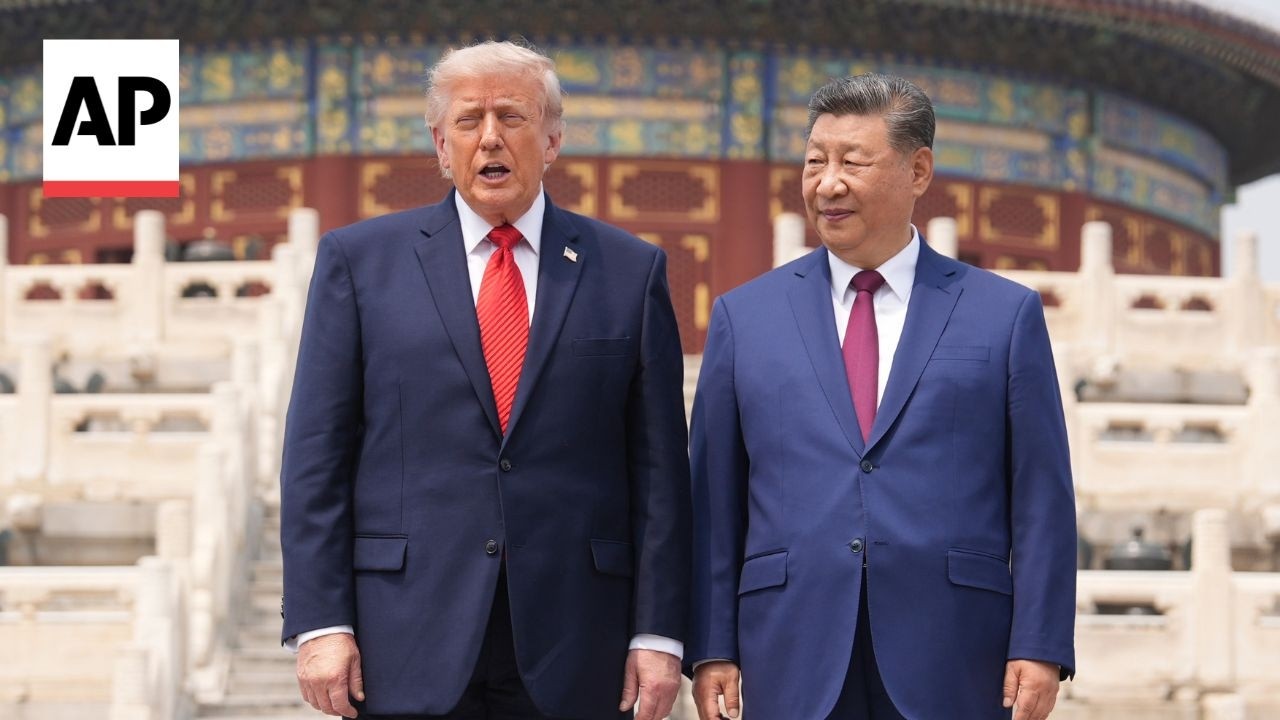
The upcoming summit between U.S. President **Donald Trump** and Chinese President **Xi Jinping** is slated to prominently feature discussions on **artificial intelligence (AI)**, a first for high-level talks between the two leaders. This focus comes amid escalating **US-China competition** in advanced AI systems and a shared, albeit differently motivated, desire to mitigate risks of unintended escalation. However, deep-seated **mistrust** between Washington and Beijing is casting a long shadow over prospects for significant agreements, with analysts predicting major breakthroughs are unlikely. The recent release of **Anthropic's Mythos model** has further intensified concerns about cybersecurity and the strategic implications of increasingly powerful AI, particularly after China was excluded from early access, fueling fears of vulnerability identification in its systems.
Key Takeaways
- AI is a central topic for the upcoming Trump-Xi summit, a first for such high-level discussions.
- Deep US-China distrust is expected to prevent significant AI agreements.
- The release of Anthropic's Mythos model has heightened concerns about AI's strategic implications.
- Both nations acknowledge risks but differ fundamentally on AI governance vs. technological containment.
- US lawmakers' consideration of semiconductor restrictions adds another layer of tension.
Balanced Perspective
AI is confirmed as a key topic for the **Trump-Xi summit**, with U.S. officials highlighting its importance. China has proposed a formal AI dialogue involving **Scott Bessent** and **Liao Min**. While researchers warn of AI's potential to accelerate threats, and both sides may consider practical measures, the core issue remains a divergence in perspectives: the U.S. views AI as a proliferation risk to be contained, while China sees containment as an attack on a general-purpose technology. U.S. lawmakers' consideration of **semiconductor supply chain restrictions** further complicates the diplomatic environment.
Optimistic View
A successful summit could establish crucial communication channels, potentially leading to **confidence-building measures** like an AI incident hotline. Such dialogue, even if limited, might signal a willingness from both **China** and the **U.S.** to manage the risks of advanced AI, preventing a dangerous arms race in the technology. The engagement could also pressure other nations to adopt similar governance frameworks, fostering a more stable global AI landscape.
Critical View
The summit is likely to be a non-starter for meaningful AI cooperation due to fundamental disagreements. The U.S. focus on **technological containment** and China's perception of this as an attack on a general-purpose technology creates an insurmountable chasm. Beijing may see this summit as a critical, perhaps final, opportunity to dissuade the U.S. from further **semiconductor restrictions**, but the deep distrust makes such persuasion improbable, potentially leading to a more fragmented and dangerous global AI landscape.
Source
Originally reported by https://www.irishsun.com/